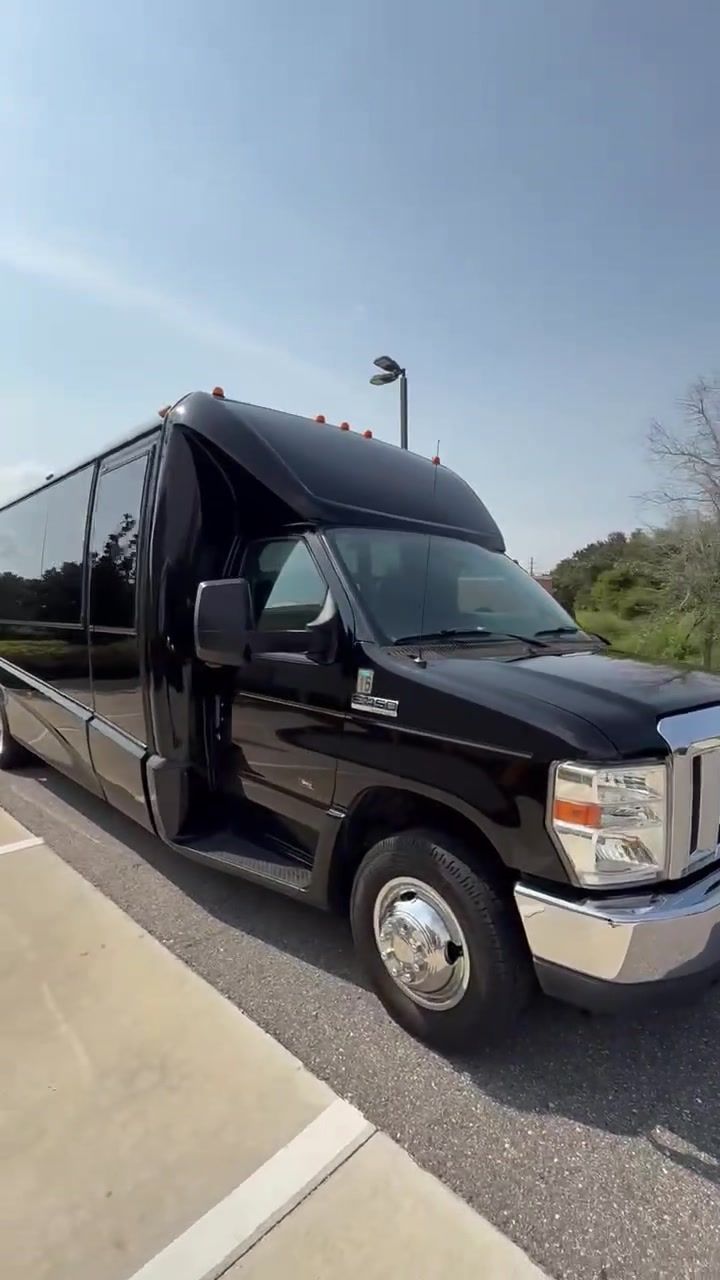
What is a 24-passenger shuttle bus?
It is the middle ground between a passenger van and a full-size motorcoach: one privately arranged vehicle for a defined group, route, and schedule.
Is it a shuttle bus, minibus, mini coach, or charter bus?
All four phrases can appear in a search, but they do not mean exactly the same thing. Clear wording helps a planner compare the right service without expecting a passenger van or a 50-plus-passenger coach.
| Term | What it usually communicates | How AVPR uses it |
|---|---|---|
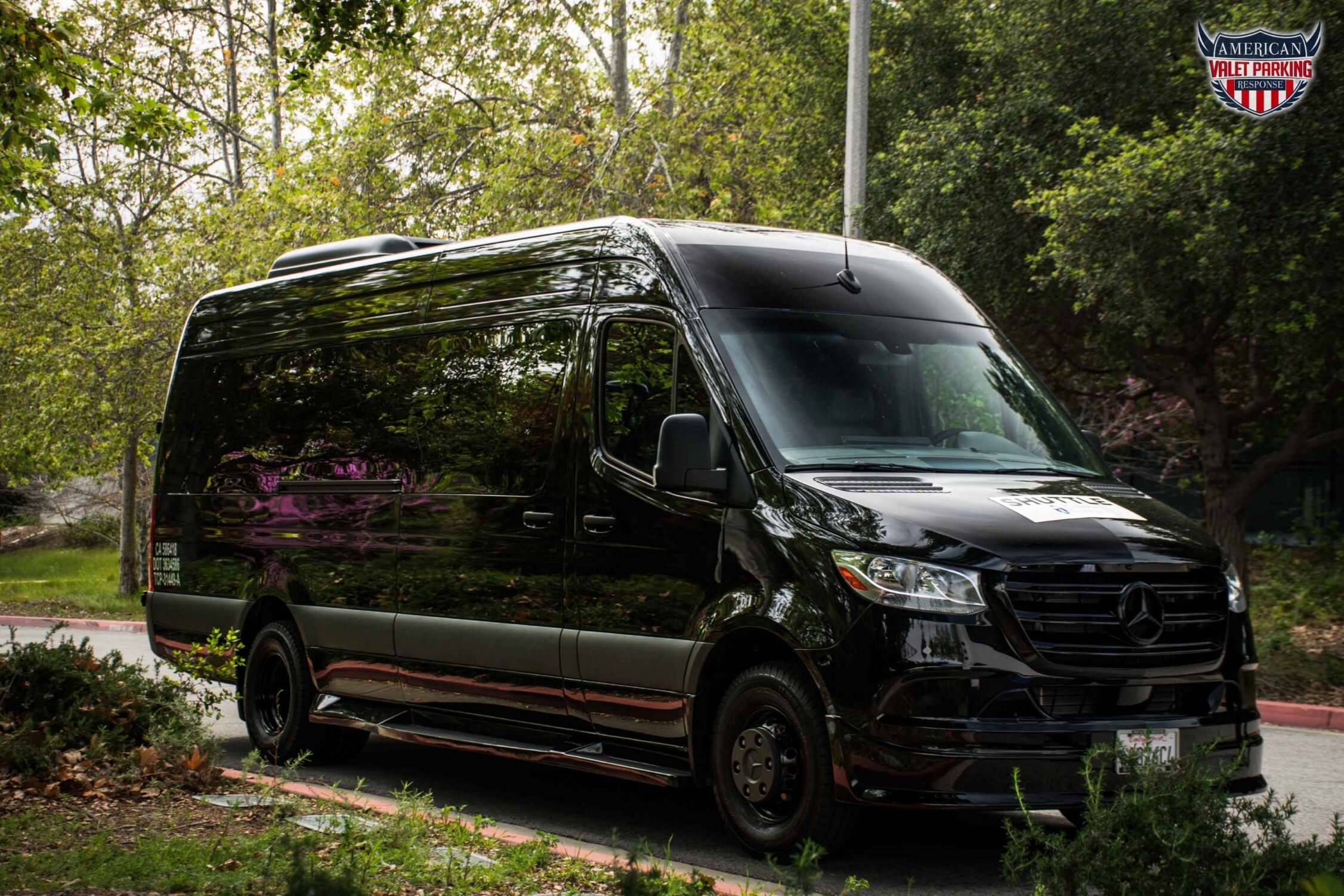
| 24-passenger shuttle bus | A specific mid-size group capacity and a planned passenger movement. | The primary, precise description for the new black shuttle. |
| Minibus | A bus smaller than a full-size motorcoach. | A natural secondary phrase for people comparing mid-size vehicles. |
| Mini coach | A mid-size shuttle presented for private, business, hospitality, or event travel. | A useful alternative, provided the confirmed vehicle details support the description. |
| Private charter | Exclusive group use arranged around a defined itinerary rather than a public scheduled route. | A description of the booking—not a claim that the vehicle is a full-size charter motorcoach. |
| Full-size motorcoach | A larger coach typically used when a group or equipment exceeds mid-size capacity. | A different vehicle category; availability must be confirmed rather than implied. |
Plain-language takeaway: searchers may type “24 passenger charter bus,” but the vehicle can still be accurately described as a 24-passenger shuttle bus or mini coach. The itinerary, passenger count, luggage, access, and requested service determine the actual fit.
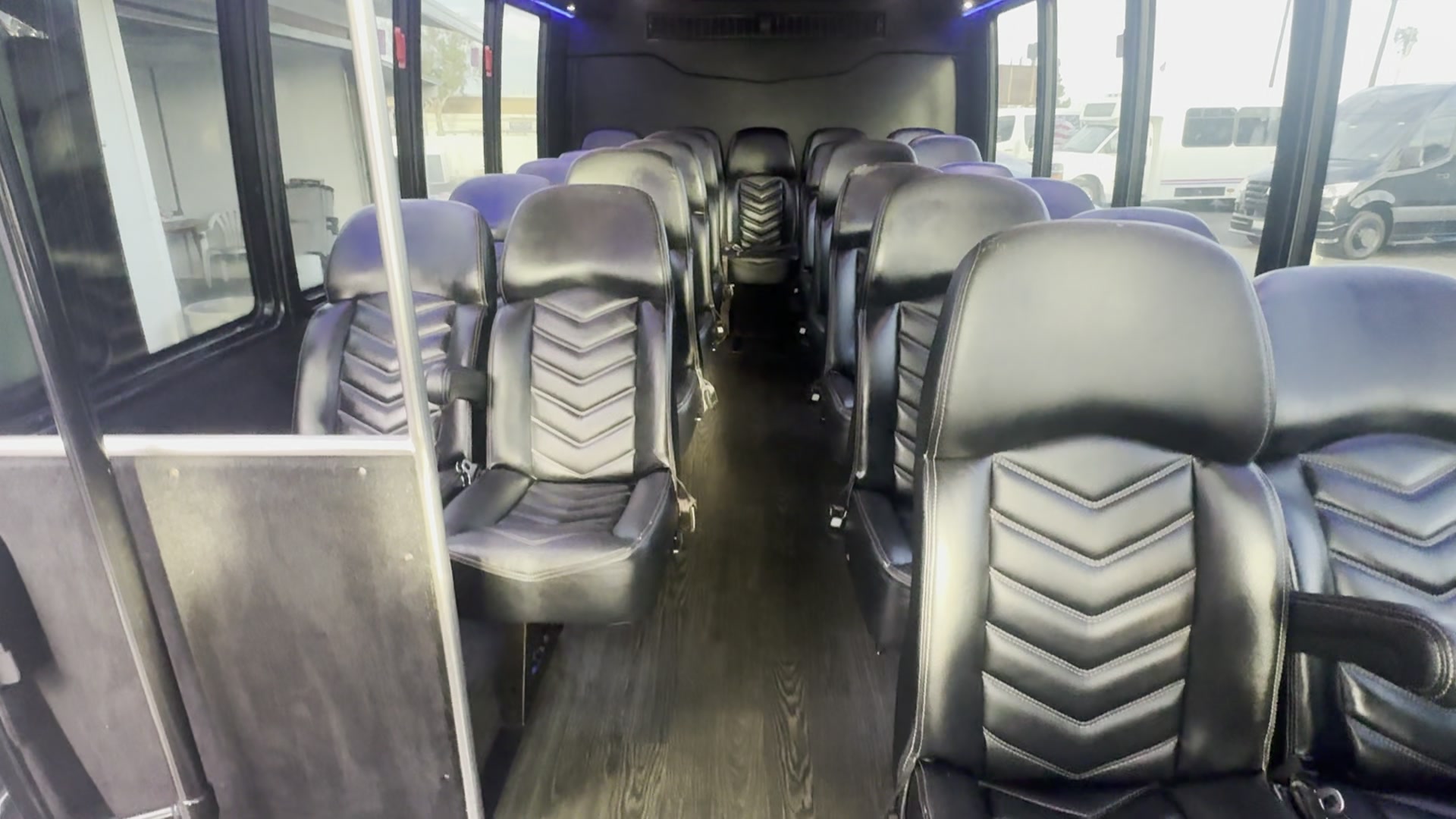
When does a 24-passenger shuttle make sense?
It can be a strong fit when one mid-size group wants to travel together and the route, access, passenger needs, and belongings have been reviewed.
- Corporate teams traveling to meetings, conferences, trainings, or private events
- Wedding guests moving between a hotel, ceremony, reception, or remote parking area
- Airport groups with one coordinated pickup plan and a confirmed luggage picture
- Hotel, venue, hospitality, or property groups needing a planned shuttle movement
- Private groups traveling between Inland Empire, Orange County, and Los Angeles locations
“Up to 24 passengers” is not the same as “24 passengers plus unlimited luggage.” Bags, mobility devices, equipment, vehicle configuration, and loading access must be included in the review.
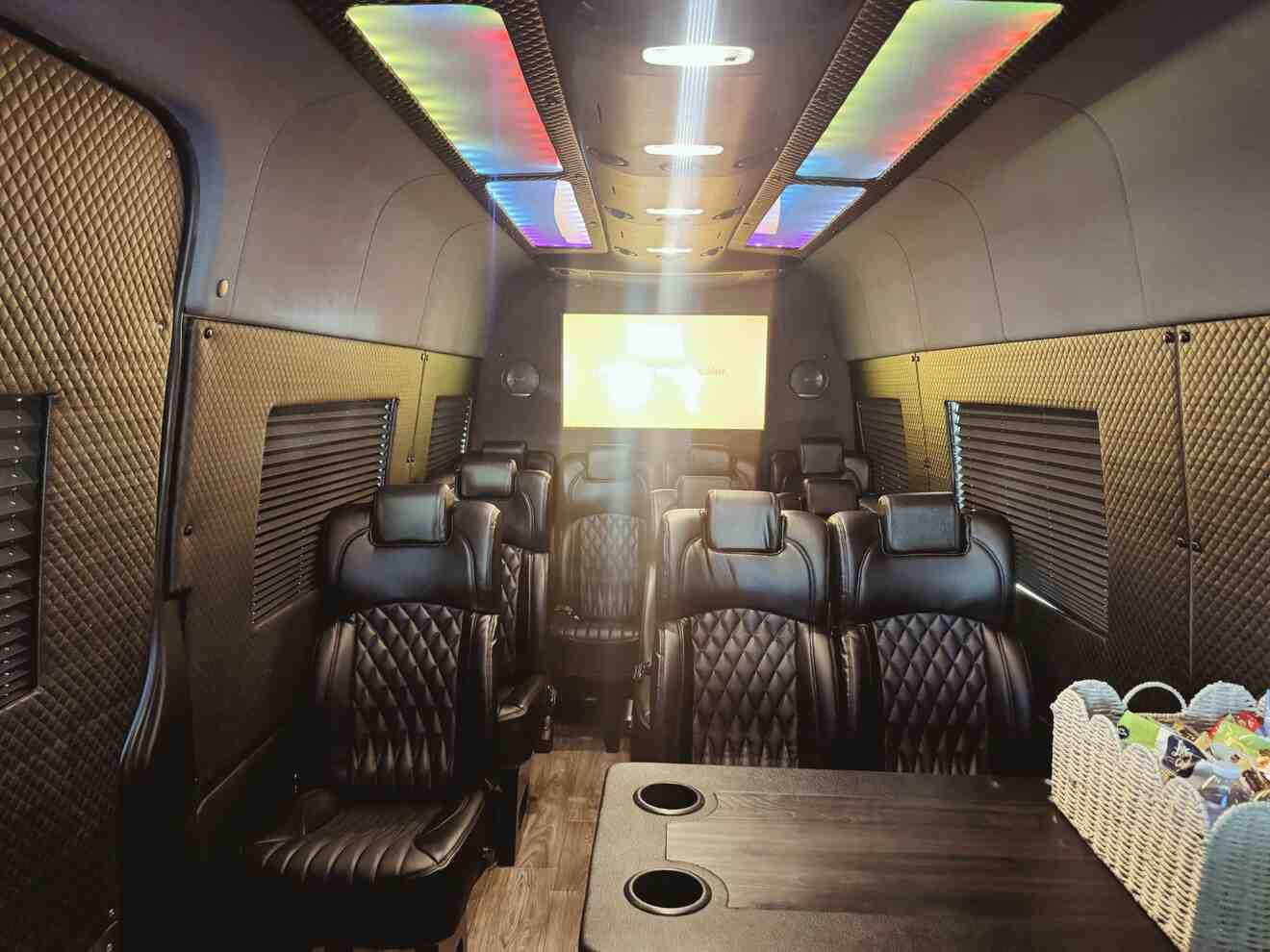
Picture the complete group movement.
The vehicle is one part of the plan. Staging, boarding, passenger space, and the route all matter.
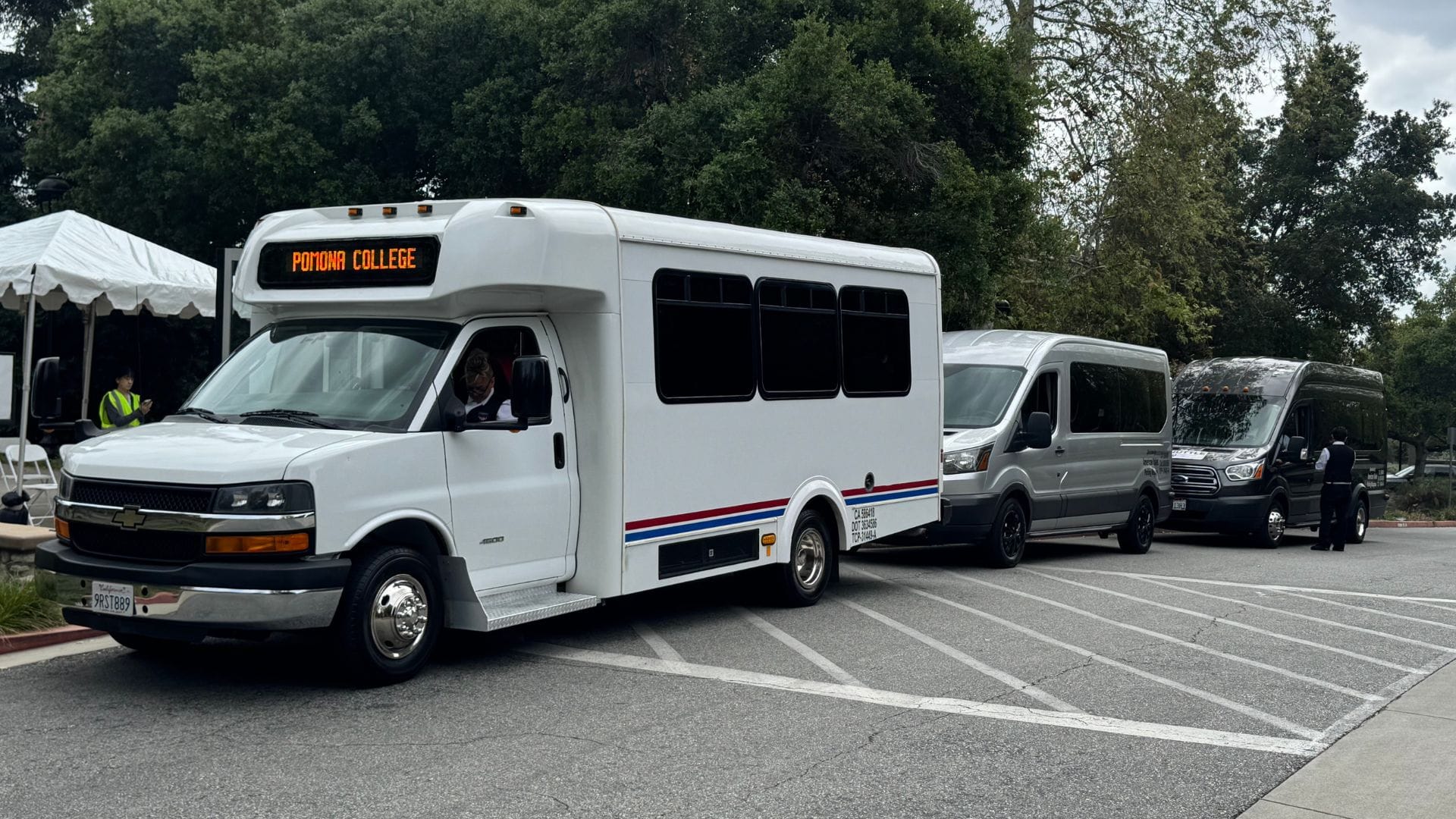
Questions planners ask before requesting a quote
Is a 24-passenger shuttle bus the same as a charter bus?
It can be chartered for exclusive group use, but it is not necessarily the same vehicle as a full-size charter motorcoach. “Charter” describes the private arrangement; “24-passenger shuttle bus” describes the more specific size and use.
Is a 24-passenger shuttle the same as a Sprinter van?
No. A Sprinter-style shuttle generally serves a smaller group. AVPR reviews the confirmed passenger count, luggage, route, and access before recommending a vehicle.
Can 24 airline passengers and all their bags fit?
Do not assume that maximum passenger seating leaves space for every bag. Share the number and type of bags, mobility devices, and equipment so the vehicle and service can be reviewed accurately.
Can a 24-passenger shuttle serve Los Angeles, Orange County, and the Inland Empire?
AVPR reviews private group requests across its Southern California service markets. Final availability depends on the date, pickup and destination, schedule, route, access, and confirmed booking details.
Is this shared-ride transportation?
No. This guide describes private group transportation arranged for a defined group and itinerary, not a public route or individual shared-ride airport service.
What should I send for a useful quote?
Send the date, exact pickup and destination, passenger estimate, luggage or equipment, accessibility needs, time window, stops, return plan, and on-site contact.
Tell AVPR how your group needs to move.
Share the passengers, bags, pickup, destination, schedule, stops, and return plan. AVPR can review whether the 24-passenger shuttle fits the itinerary.